
The Pocket Watch Case
The case is the part of a pocket watch most owners actually touch. It carries the watch in the pocket, takes the wear and the bumps, and is what you see first when the piece is brought out. For the collector, the case is also where most of the documentary evidence of a watch’s identity lives — the hallmarks, karat marks, maker’s stamps, presentation engravings and serial numbers that allow a watch to be dated, attributed and valued.
An antique pocket watch case is, in other words, both armour and certificate. A movement without its original case is significantly less collectable than the same movement in its original case; a fine movement in a beautifully marked period case is worth substantially more than the parts would suggest individually. Understanding cases — types, materials, markings, sizes and how to open them safely — is fundamental to collecting pocket watches well.

The Anatomy of a Pocket Watch Case
Before discussing types and materials it is worth naming the parts. Almost every problem with a pocket watch case — a loose bow, a sprung lid, a worn hinge, a damaged crystal — lives in one of these named components, and being able to describe the issue precisely is half the work of solving it. The hero photograph at the top of this page shows a hunter case opened up with its movement and dial removed, which makes most of the parts named below directly visible.
| Part | What it is & where to find it | In hero photo |
|---|---|---|
| Top assembly — the suspension end of the case | ||
| Pendant | The neck at the top of the case (12 o’clock on an open-face watch, 3 o’clock on a hunter) that carries the crown and the bow. Soldered or threaded into the case middle. | ✓ visible |
| Bow | The ring through the top of the pendant from which the watch hangs on a chain or fob. Pivots freely. Bows wear thin where they cross the pendant lugs and are a common point of damage. | ✓ visible |
| Crown | The knurled button on top of the pendant used to wind the watch and (on lever-set watches, after pulling out a separate setting lever) to set the hands. On hunter cases, also presses to release the lid spring. | ✓ visible |
| Front of the case — the dial side | ||
| Hunter lid | On hunter and half-hunter cases only: the hinged metal cover protecting the crystal. Sprung; opens at the press of the crown. The lid is itself a complete piece of case-making, often hallmarked separately. | ✓ visible (open) |
| Bezel | The ring that holds the crystal in place, screwed or snapped onto the front of the case middle. Removing the bezel gives access to the dial; the bezel itself is often the first part to distort under impact. | — |
| Crystal | The transparent cover over the dial — mineral glass on most antiques, occasionally rock crystal on early pieces, acrylic on mid-20th-century watches. Held by the bezel; freely replaceable. | — |
| Body of the case — the structural shell | ||
| Case middle / band | The cylindrical body of the case between the bezel and the caseback, holding the movement. Carries the threads or hinge for the back, and the threads or snap recess for the bezel. | ✓ visible |
| Caseback | The rear cover. May be a separate snap-on lid, a screw-on disc, or a hinged cover. The inner caseback usually carries hallmarks, karat marks and case-maker’s stamps. The outer surface is where presentation engraving lives. | ✓ inner side |
| Hinge | On hinge-back and hunter cases, the small jointed pin along the band that allows the lid or back to swing open. Hinges fatigue with repeated opening and are a delicate repair job. | ✓ visible |
| Internal protection | ||
| Dust cap / cuvette | An inner metal cover sitting just over the movement (sometimes also over the back of the dial) that protects the mechanism from pocket dust and lint. Often signed with grade, jewel count or maker’s name; an important piece of original-case evidence. | — |
| Stem & sleeve | The slim shaft running from the crown down through the pendant to the movement, and the threaded tube it passes through. Not strictly part of the case but commonly damaged at the same point: a snapped stem usually means a stuck crown that has been forced. | — |
Case Types
Pocket watch cases are classified primarily by what protects the dial. The choice of case type is far from cosmetic: it determines where the crown sits, how the watch is read, and what the watch was practically intended for. A railroad watch, for example, had to be open-face by regulation — a railroader could not afford the half-second delay of opening a hunter lid before reading the time.
No cover over the crystal; the dial is permanently visible. Crown at 12 o’clock, seconds bit at 6 o’clock. Required for railroad service in the United States after 1893 because the time could be read instantly without a two-handed manoeuvre.
Practical, durable, and easy to glance at — but the crystal is exposed to pocket grit and impact. The dominant case form on American watches from c.1890 onward.
A full hinged metal lid covers the crystal. The crown is at 3 o’clock; pressing it releases a sprung catch and the lid flies open. The dial is rotated 90° from the open-face layout so that 12 o’clock points to the hinge.
Excellent dial protection, classically Victorian in style. Common on English and European watches, and on dress watches everywhere. The lid takes the wear instead of the crystal.
A hunter lid with a glazed circular window cut through it, often surrounded by enamel or engraved Roman numerals. The time can be read at a glance through the window without opening the lid — a compromise between protection and convenience.
Classic English form, particularly popular with civil-service and railway pocket watches in late-Victorian and Edwardian Britain.
Hinged covers on both front and back of the case. Open the front to read the time; open the back to view the movement. Found on better-quality watches whose owners wanted to display the engine-turned engraving and finishing of the movement.
Heavier and more expensive to make than a single hunter; less common, and a desirable feature today.
The full belt-and-braces version: glazed windows in both front and back covers. The time can be read without opening either lid, and so can the movement — balance, barrel, plates and finishing all visible through the rear window.
Quite rare. Almost always indicates a high-grade or presentation watch.
An older form, dominant from c.1700 to c.1830: the watch movement and dial sit inside an inner case, which itself sits inside a separate outer case fitted only when the watch was carried. The outer case was often elaborately decorated — pinwork, repoussé, fishskin, tortoiseshell, painted enamel.
Pair-cased verge fusee watches are an entire collecting category of their own.
A handful of less common forms also turn up. The three-quarter hunter has a smaller window than a half-hunter, with a shoulder of solid metal at the top of the lid. The side-winder is a hunter case fitted with an open-face movement, or vice-versa — the result is a watch with the crown in an unusual position (typically 4 o’clock or 10 o’clock) and is generally regarded as a marriage or a later re-cased piece, not original.
How Cases Open
Cases are also classified by the mechanism that opens them. This matters because using the wrong tool on the wrong case type is the most common way collectors damage their watches.
The caseback unscrews like a jar lid; the bezel often does the same. Used on most American railroad-grade watches and on quality Swiss and English open-face pieces. Threads are usually fine. Should turn with hand pressure; if it resists, stop — something is wrong.
The back is held by friction in a recess in the case middle, popped off with a fingernail-prying action at a small lip. Common on older and cheaper watches. Easy to open but easy to dent if forced — use the proper tool, not a screwdriver.
The caseback is hinged to the case middle and held shut by a sprung catch (often released by pressure on a small lever near the pendant or under the lid). Common on English silver and gold watches. The hinge is delicate and easily sprung.
The bezel and crystal swing out as a single hinged unit on a pendant pivot, taking the dial and movement with them; the back of the case stays put. Common on early 20th-century American open-face watches. The crown is screwed off to release the unit.
You will sometimes hear the older terms jointed case (any hinged case) and spring case (any case with a sprung lid). Modern collecting language has settled on hunter / open-face for the front, and screw / snap / hinge / swing-out for how the back is held.
Case Materials
The practice of manufacturing pocket watch cases specifically designed for movements made at the same factory didn’t really start until the early 1920s. Up until that time, pocket watch movements were made and sold to watchmakers, who would then fit the movement into a case chosen by the customer.
So first the customer would choose the type of pocket watch they wanted — Waltham, Elgin and so on — then the particular grade, model and size, then decide what type of case they wanted the movement to live in. Pocket watches were never all that affordable until the so-called “dollar pocket watch” arrived, so people generally chose a relatively expensive case. Typical precious metals such as gold and silver were used.
The material a case is made from drives most of the watch’s value — and it is also where buyers are most often misled. The difference between solid 18-carat gold and gold-filled is enormous in worth, but the two can look almost identical at a casual glance. The American case manufacturers used their trademarks on the cases they made, so from these marks and a few reference checks from trademark books you can tell what the metal is. For European pocket watch cases, since the early 1600s, all solid precious metals were hallmarked — making it straightforward to tell exactly what quality (or karat) the metal is. Read the marks before reading the case.
Extremely rare in pocket watch cases — mainly Patek Philippe, Vacheron and a handful of high-grade American makers in the early 20th century. Heavy, dense, dull silver-grey when not polished. Marked Plat, Pt or 950.
Worth more than gold for the same weight, and a personal favourite for anyone who can afford it.
The standard for fine European pocket watches and high-grade American hunter cases. 75% gold by weight (18/24). Marked 18K, 18ct, 0.750, or with a country-specific gold mark such as the English crown-and-18 or French eagle’s head.
Warm yellow colour; soft enough to show wear on raised engraving over time. Always has an intrinsic value attached to it beyond the movement alone.
The dominant precious-metal case material on American pocket watches — harder wearing than 18ct and more affordable. 58.3% gold by weight. Marked 14K or 0.585.
Slightly paler in colour than 18ct; significantly more durable in daily wear.
The minimum legal gold standard in Britain (9ct was introduced in 1854 alongside 12ct and 15ct, both later abolished in 1932). Marked with the English 9 / 0.375 mark on the inner caseback.
Common on English pocket watches from the 1920s onward; pale yellow, harder than 14ct.
The default case metal on English pocket watches from the 18th century onward. Sterling silver is 92.5% pure (marked with the lion passant in England, 925 elsewhere); Continental silver is often 0.800 fine, marked accordingly.
Tarnishes black and is easily polished bright; excellent value as a collecting metal.
For more practical purposes, a special alloy was developed which went by several names: Silveroid, Silverore, Silverode or Silverine. “Silveroid” became the standard name for a metal consisting of 45% nickel, 54% copper and 1% manganese. It was fairly hard-wearing and could withstand the rigours of everyday use — including on the railroads.
For pocket watch collectors, almost all the value of a Silveroid-cased watch is in the movement. The case is really only of aesthetic value. That said, some people collect only pocket watch cases, and this has become more popular as the price of movements has increased.
Put simply, gold-filled was a process where two bars of gold were sandwiched around a base metal (usually brass), then the sandwich was rolled until the desired thickness was achieved. This resulted in a gold surface that was generally thicker and more hard-wearing than simple plating.
Quality is expressed as a fraction such as 1/20 14K G.F. (the gold layer is 1/20 of the total weight) and sometimes a years guarantee — “Warranted 20 Years” or “Guaranteed”. The higher the years figure, the better the quality. American makers Keystone, Crescent, Star and Boss were major suppliers.
Gold-filled cases almost all show a small amount of “brassing” — where the gold surface has worn off and the brass beneath shows through. Not surprising on a 100-year-old case. Wears like solid gold for decades when the fill is thick.
Similar to gold-filled but with a thinner gold layer (1/30 to 1/40 of total weight). Marked RGP or Rolled Gold Plate. Wear-through is more common than on properly made gold-filled cases.
A microscopically thin gold layer deposited electrochemically onto a base metal core. Marked GP or EP. Wears through quickly and shows brassy patches at edges and high points within years of regular use.
Avoid paying gold prices for plated cases.
Used on many military, dress and utility pocket watches from the late 19th century onward. Nickel cases tarnish to a grey patina; stainless steel resists rust and is common on mid-20th-century watches. Both are durable and undervalued today.
Inexpensive cases, often chrome-plated brass or nickel-plated brass. Marked Base Metal, Chromium Plate or with a generic case-maker’s name. Common on Ingersoll dollar watches and inexpensive 20th-century pieces.
The table below summarises the marks to look for when identifying case metal. All marks appear on the inside of the back cover; use a loupe in good light.
| Material | What you see on the inside of the caseback | Notes |
|---|---|---|
| Platinum | PLAT • Pt • 950 • 900 | Very rare in pocket watches; dense and cold to the touch |
| 18ct solid gold | 18K • 18ct • 750 • 0.750 • English crown + 18 | Full English hallmarks on English cases; karat stamp on American |
| 14ct solid gold | 14K • 585 • 0.585 | Standard American precious-metal case; common c.1890–1940 |
| 10ct solid gold | 10K • 416 • 0.417 | Lower-grade American gold; less common than 14K |
| 9ct solid gold | 9ct • 375 • English 9 mark (crown + 9) | English standard from 1854; most common English gold from 1920s |
| Sterling silver | Lion passant (English) • 925 • 0.925 | Full English hallmarks include town mark + date letter |
| Continental silver | 800 • 0.800 • national control mark | Swiss, German, Austro-Hungarian marks differ by country and period |
| Gold-filled | 1/20 14K G.F. • 1/10 10K • Warranted 20 years • Gold Filled | Always states fraction + karat or gives year guarantee; never just “gold” |
| Rolled gold / RGP | RGP • Rolled Gold Plate | Thinner gold layer than gold-filled; wear-through more common |
| Gold-plated / EP | GP • EP • Gold Plated • Gold Electroplate | Microscopically thin layer; wears through at edges within years |
| Nickel silver / base metal | No precious metal marks; sometimes NICKEL, BASE METAL or maker’s name only | Often no marks at all; confirm by testing if in doubt |
Maker’s Marks, Serial Numbers and Engravings
Once a case is open, the inner surfaces tell most of the story. There are three main families of marks to read, plus a fourth group that can add significant historical interest.
1. Material marks. These tell you what the case is made of. On English cases, full assay-office hallmarks (a maker’s mark, a fineness symbol, an assay-office town mark, and a date letter) appear on the inner caseback and sometimes the inner front. On American cases, a karat number (14K, 18K) or a gold-filled fraction is stamped instead. On Continental European cases the per-mille mark (0.750, 0.585, 0.800) is used, often alongside a country-specific control mark such as a Swiss head, French eagle’s head, or Austrian hound’s head. See our complete guides to English hallmarks and how to read them.
2. Maker’s marks. The case maker is rarely the same firm as the movement maker. American case makers such as Keystone, Crescent, Boss, Star, Wadsworth, Fahys and Dueber stamped their names or trademarks inside the caseback. English case makers used a registered sponsor’s mark (initials in a shaped cartouche) at the assay office; the directory of these is the standard reference for matching English silver and gold cases to a maker. Watch manufacturers occasionally cased their own movements (Ball, Howard at certain periods, most European brands), in which case the case-maker mark and the dial mark agree.
3. Serial numbers. Most quality cases carry a case serial number, which is independent of the movement serial. This is normal and expected. Cases were made in batches and married to movements at point of sale, especially in the American trade where movements and cases were sold separately. The presence of two different serial numbers does not mean the watch has been re-cased — only that the case and movement were not necessarily made together.
4. Presentation engravings. The outer caseback — and sometimes the dust cap or inner cover — may carry engraved text recording a gift or award. A presentation engraving is a documentary record that connects the watch to a specific person, occasion or organisation. Railroad service awards, military presentations, wedding and retirement gifts, trade-union presentations and lodge awards are all found. A well-documented presentation (a named railroad employee, a dated regimental award, an identified event) adds historical interest and often a meaningful price premium. Generic engravings (“To J. Smith from W. Jones, Christmas 1898”) are usually price-neutral. Erased or polished-off engravings leave a telltale flat spot on the caseback surface, visible under raking light — disclose if selling.
Case Sizes
American pocket watch case sizes use a gauge inherited from the Lancashire watch trade, and it is an arbitrary scale rather than a metric or imperial measurement. The size of an American case refers to the diameter of the movement it is built to hold, running from the small ladies’ sizes up to 20 and beyond in increments of 1⁄30 inch above a base of 15⁄30 inch.
You will see the same size written two ways and they mean exactly the same thing: 18s and 18-size, 16s and 16-size, 12s and 12-size. Dealers and collectors mostly write the short form; catalogues and reference books mostly write the long one. Sizes smaller than 0 are written the other way about, as 3/0, 6/0 or 18/0 — read those as three-aught, six-aught and eighteen-aught, counting downwards from zero.
Convert a size or a measurement
Enter an American size (16s, 16-size, 6/0) and get the movement diameter — or enter a measurement (43 mm, 1.7 in, 17 lignes) and get the nearest size.
Try one of these: 18s 16s 12s 6/0 43 mm 1.7 in 17 lignes
| Size | Movement diameter | Typical use |
|---|---|---|
| 18/0 (eighteen-aught) | 14.4 mm / 0.567 in | The smallest commercial movements; tiny pendant and brooch watches |
| 10/0 (ten-aught) | 21.2 mm / 0.833 in | Lady’s pendant and wristlet conversions |
| 6/0 (six-aught) | 24.6 mm / 0.967 in | Lady’s pendant watches |
| 3/0 (three-aught) | 27.1 mm / 1.067 in | Lady’s pendant and small dress watches |
| 0s (0-size) | 29.6 mm / 1.167 in | Lady’s pendant watches; the base of the scale |
| 6s (6-size) | 34.7 mm / 1.367 in | Smaller lady’s and dress watches |
| 8s (8-size) | 36.4 mm / 1.433 in | Small men’s and unisex dress watches |
| 10s (10-size) | 38.1 mm / 1.500 in | Lady’s pendant; some smaller men’s |
| 12s (12-size) | 39.8 mm / 1.567 in | Slim dress watches; thin pocket watches of the 1920s and 30s |
| 14s (14-size) | 41.5 mm / 1.633 in | An uncommon intermediate men’s size |
| 16s (16-size) | 43.2 mm / 1.700 in | The standard American size — railroad watches, quality men’s |
| 18s (18-size) | 44.9 mm / 1.767 in | The older American standard, 19th-century men’s |
| 20s (20-size) | 46.6 mm / 1.833 in | Heavy-duty railroad and presentation watches |
Every figure in that table is calculated from the gauge — diameter = (size + 35) ÷ 30 inches — rather than copied from a chart, which is why it carries three decimal places and why no two printings of it can disagree. That is worth saying plainly, because it is the opposite of the situation with serial-number tables, which rest on published lists and surviving factory records and can never be better than those. A size is arithmetic. A production year is evidence.
The 16-size case became dominant after the 1893 railroad standards because the slimmer profile sat more comfortably in a vest pocket than the older 18-size, while still allowing a 21- or 23-jewel railroad-grade movement. The 12-size case is the classic dress-watch profile: wafer-thin, often gold or platinum, frequently with a chain-and-fob. The intermediate even sizes — 8 and 14 — were made, but in far smaller numbers, which is why a chart listing only 0, 6, 12, 16 and 18 is not wrong so much as abbreviated.
European watches use the ligne, a French unit equal to 2.2558 mm. Movement diameter is given as a number of lignes followed by a triple prime (e.g. 16′′′ = approximately 36.1 mm). Lignes are still the standard unit in Swiss watchmaking today. Because both units are fixed arithmetic, the two scales convert exactly: the Swiss equivalent of the American 16-size is about 19 lignes (19′′′ = 42.9 mm against 16s at 43.2 mm), and of the 18-size about 20. A 17- or 18-line movement is a good deal smaller than either — 38.4 and 40.6 mm, which is American 10-size to 12-size territory. The converter above accepts lignes as well, so a Swiss movement can be placed on the American scale directly rather than by eye.
Opening a Case Safely
Opening an antique case is the moment when most damage happens. The case has been closed for decades, the threads or hinge are dry, the metal may be soft, and the gasket (if any) has long since perished. A few minutes spent identifying the case type and using the right method saves hours of restoration later.
Before applying any tool, decide which type of case you are looking at. The clues are visible on the closed case:
- A faint circular seam running parallel to the band, with no hinge visible — almost certainly a screw-back.
- A shallow lip at the edge of the back, with no seam visible on the band — a snap-back. Look for a small notch where a fingernail or case knife should enter.
- A visible hinge pin on one side and a small catch or button on the other — a hinge-back. Press the catch; do not pry.
- The whole case appears to be a single screwed-down unit with the crown acting as a pivot — a swing-out. Unscrew the crown, then swing the bezel outward.
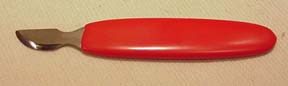
For screw-back cases, a case opener ball (a rubber pad mounted on a knurled disc) provides friction without scratching. For snap-back cases, a case knife — a thin, blunt blade with a flat edge — lifts the back from a small notch by leverage on the case middle, not on the back itself. Never use a screwdriver, kitchen knife or coin: they scratch the case, slip, and damage soft gold and silver almost without exception.
Hold the watch in one hand, dial down, on a clean cloth. Apply the tool with steady pressure; for a screw-back, turn slowly anti-clockwise (counter-clockwise). For a snap-back, lift the back away parallel to the case, not at an angle. If the case resists, stop. A stuck back nearly always indicates corrosion in the threads or a previous careless re-fit; a watchmaker can clear it without damage. Forcing it usually distorts the back beyond repair.
Damage, Repair & Restoration
Antique cases collect a predictable set of injuries, all of them affecting value. Knowing what is repairable and what is permanent helps in pricing and in deciding whether to restore.
| Damage | Severity | Repair |
|---|---|---|
| Light scratching | Cosmetic | Light hand polishing on silver and gold-filled. Do not machine-polish solid gold — it removes engraving and karat marks. |
| Dents on caseback | Moderate | Pushed out from inside by a case-restorer using a wooden form. Soft gold and silver are workable; gold-filled often shows the brass underneath after dent-removal. |
| Worn engraving | Moderate | Sometimes re-cut by a hand engraver, but the new work will not match the soft outline of the original. Generally better to leave alone. |
| Wear-through on gold-filled | Significant | Permanent — the gold layer is gone. Replating is possible but is no longer original gold-filled. Affects value substantially. |
| Loose bow | Functional | Can be tightened or replaced; period-correct replacement bows are available. |
| Cracked or chipped crystal | Functional | Replaced. New mineral-glass crystals in standard sizes are stocked; old rock-crystal originals are scarce. A small chip on the bezel edge is usually acceptable. |
| Sprung hunter lid | Functional | Hinge re-pinned, spring replaced. Common job for a case-specialist watchmaker. Easy to do badly — use a competent restorer. |
| Solder repairs to bow or pendant | Significant | Visible as a discoloured seam under magnification. Reduces value — the watch is no longer in untouched original condition. Disclose if selling. |
| Bezel distortion | Significant | The bezel no longer screws on flush. Re-cutting threads or replacing the bezel is possible but expensive; an out-of-round bezel is a serious value reducer. |
What to Look For When Buying
Whether you are buying a watch primarily for the case — an English silver half-hunter, a heavy 18ct hunter, a presentation-engraved gold-filled railroad case — or buying a movement that happens to be in its case, the same checks apply.
- Read the marks before reading the case Open the back. Check for karat marks, hallmarks or gold-filled fraction. A solid-gold case will be marked clearly inside; gold-filled will say so explicitly. An unmarked case — or one with marks rubbed beyond legibility — should be priced as a base-metal case until proven otherwise.
- Match the case maker, period and country to the movement A 1905 American 16-size railroad movement in a 1930s English 9-carat case is a marriage. Not necessarily a bad watch, but not an original combination, and the price should reflect that. Period-correct cases for major American grades trade independently and are often added to ex-case movements.
- Check the bow and pendant for solder repairs Look for a faint discoloured ring around the pendant base or where the bow joins the pendant. Solder is the giveaway. Both areas take heavy wear from the chain and are commonly repaired; the repair affects the watch’s status as untouched original.
- Check threads and hinge action A screw-back should turn freely with hand pressure for the entire travel; a hunter lid should snap shut crisply when released and stay shut without effort. Stiff threads, a sluggish hinge, or a lid that pops open in the pocket all point to wear or distortion.
- Inspect for wear-through on gold-filled Look at the high points: the lugs of the bow, the corners of an engraved bezel, the bottom edge of the caseback where it rubs the pocket. Brassy patches there indicate the gold layer has worn through. Slight wear-through is a price reducer; extensive wear-through halves the case value.
- Look for re-engraving or removed monograms A monogram that has been polished or filed off leaves a slightly thinner, flatter area on the caseback — often only visible by reflecting light across the surface at a low angle. A re-engraving over the same area can be detected by inconsistent letter depth.
- Crystal: original or replaced A crystal with the same fine surface scratching as the rest of the case is likely original; a crystal noticeably clearer or sharper than its surround is a later replacement. Either is acceptable on a working watch — but originality matters for top-grade collector pieces.
- Open and close before buying On hunter cases, press the crown and observe the lid release; on screw-backs, test that the back unscrews and re-seats cleanly. A case that the seller will not open is a case with something to hide.
Values & Price Impact
Case material, condition and originality together drive a substantial fraction of the watch’s total value. As a rough guide, the same movement in different case material can vary in price by a factor of three or more.
| Case material & condition | Effect on watch value |
|---|---|
| Solid 18ct gold, original case, sharp marks, no repairs | Premium — significant uplift over the same watch in lesser materials. The case alone may be worth more than the movement. |
| Solid 14ct gold, original, light wear | Substantial premium over silver / gold-filled. The most-collected American case grade. |
| 9ct gold (English), original, light wear | Useful premium but well below 14ct or 18ct. Common on English 1920s–30s pieces. |
| Sterling silver, original case, sharp hallmarks | Modest premium over base metal; greater on English watches than on Continental. |
| Gold-filled, no wear-through, marks legible | The American collector standard for mid-grade watches. Holds value well; major case makers (Boss, Keystone, Crescent) command a slight premium. |
| Gold-filled, visible wear-through at high points | Reduced — expect 25–50% off comparable un-worn case value, depending on extent. |
| Nickel / stainless / base metal, original | Baseline. Movement and dial drive value almost entirely. |
| Re-cased — period-correct replacement | Reduced relative to original-cased examples; the discount is larger on high-grade movements where the original case was a meaningful part of the watch’s identity. |
| Re-cased — non-original or wrong-period replacement | Substantially reduced. Treat as a movement-only purchase plus a case. |
| Damaged case — dents, sprung lid, split bow | Discount the cost of professional case repair (typically £100–£400 / $150–$500) from the equivalent good-condition price. |
Two further notes on case value. First, a presentation-engraved case — a railroad service award, a regimental presentation, a wedding gift — can add or subtract value depending on the engraving’s historical interest and the buyer’s taste. Strongly documented presentation pieces (railroad pocket watches awarded to identifiable employees, for example) typically sell at a premium over plain examples. Generic engravings (To J. Smith from W. Jones, 1898) are usually neutral. Second, a heavy-gauge case on a lesser movement is rare but not unknown — collectors occasionally buy such pieces for the case weight alone, with the intention of recasing a better movement into it.
Related Pages
- English Hallmarks — the full assay-office system, lion passant, date letters, town marks, with reference images of every English assay office mark.
- How to Read English Hallmarks — a 5-step guide to dating an English silver or gold case from its marks, with worked examples.
- Pocket Watch Parts A–Z — the full glossary of named parts, including all components mentioned on this page.
- Pocket Watch Repair — tools and basic restoration, including the case-opening tools shown above.
- Watch Papers — the printed and hand-cut discs tucked inside the case of a pair-cased watch, and how to read and date them.
- Pocket Watch Value — how case condition fits into overall valuation.
- Pocket Watch Buyers Guide — the wider buying checklist of which the case section is one part.
- Fake Pocket Watches — including fake gold marks and re-cased fakes.