
Pocket Watch Makers — Complete Guide
The golden age of American pocket watch manufacturing ran from roughly 1850 to 1970. During that period a handful of companies produced tens of millions of precision timepieces that still tick reliably today. Click any maker below for a full history, grade guide, and — for American makers — a complete serial number table so you can date your watch precisely.
How the Trade Divided Itself
The American factories were not really competing with one another across the board. They were competing within tiers, and knowing which tier a watch was built for tells you more about it than the name on the plate does.
At the top sat the railroad grades — 21 and 23-jewel movements, adjusted to five or six positions, built to a written specification and priced accordingly. Every serious factory wanted a watch in this class because it was the industry's shop window: Hamilton's 992, Waltham's Vanguard, Illinois's Bunn Special, Elgin's B.W. Raymond. Beneath that came the bulk of production, the 7 to 17-jewel movements sold to ordinary buyers through jewellers and mail-order houses, where price mattered more than adjustment and where most of the tens of millions were made. At the bottom, from the 1890s, came the dollar watch — Ingersoll and Waterbury selling pin-lever movements for the price of a good meal, and selling them by the million.
A few firms worked one tier almost exclusively. E. Howard never chased volume; Ingersoll never chased quality. Most of the others ran the full range, which is why a maker's reputation is a poor guide to any individual watch carrying its name.
American Pocket Watch Makers
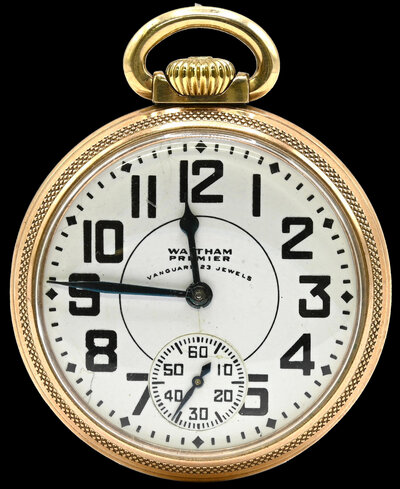
Waltham
The pioneering American Watch Co, 1850–1957. Over 35 million movements produced. Shown: Waltham Premier Vanguard 23 Jewels.
History & Serials →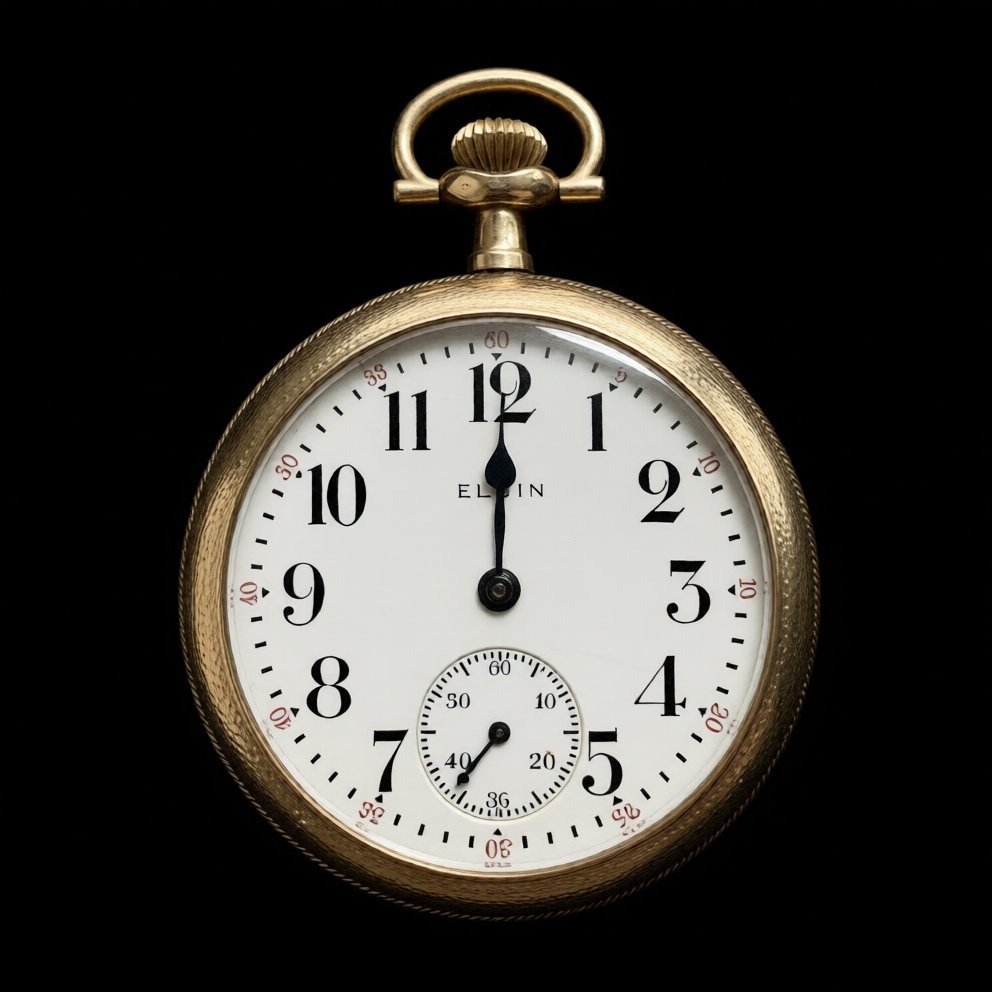
Elgin
Elgin National Watch Company, Illinois, 1864–1964. America's largest pocket watch manufacturer with an estimated 60 million movements.
History & Serials →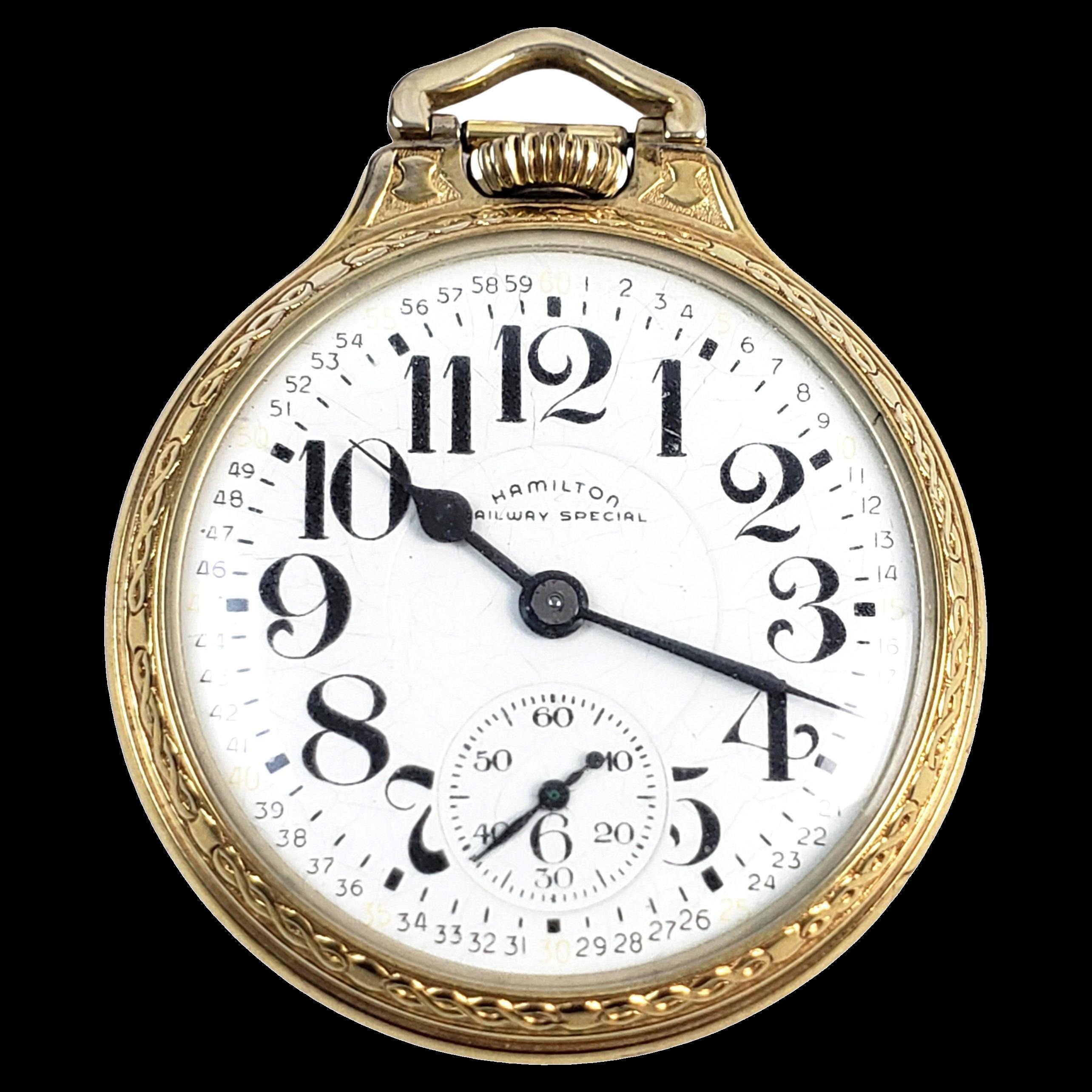
Hamilton
Lancaster PA, 1892–1969. Famous for railroad and military watches. Shown: Hamilton Railway Special — the finest American railroad movement.
History & Serials →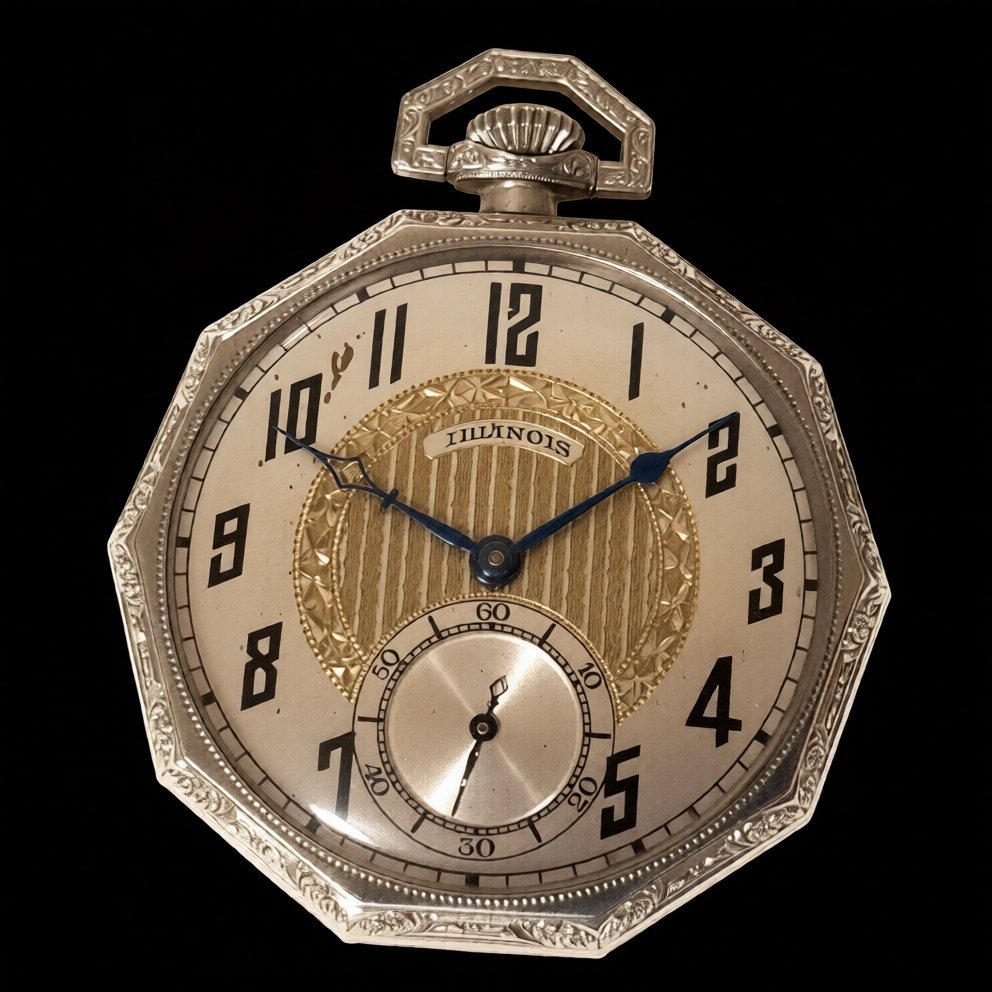
Illinois
Springfield Watch Co, Illinois, 1872–1927. Acquired by Hamilton. Noted for the Bunn Special and the elegant Art Deco models of the 1920s.
History & Serials →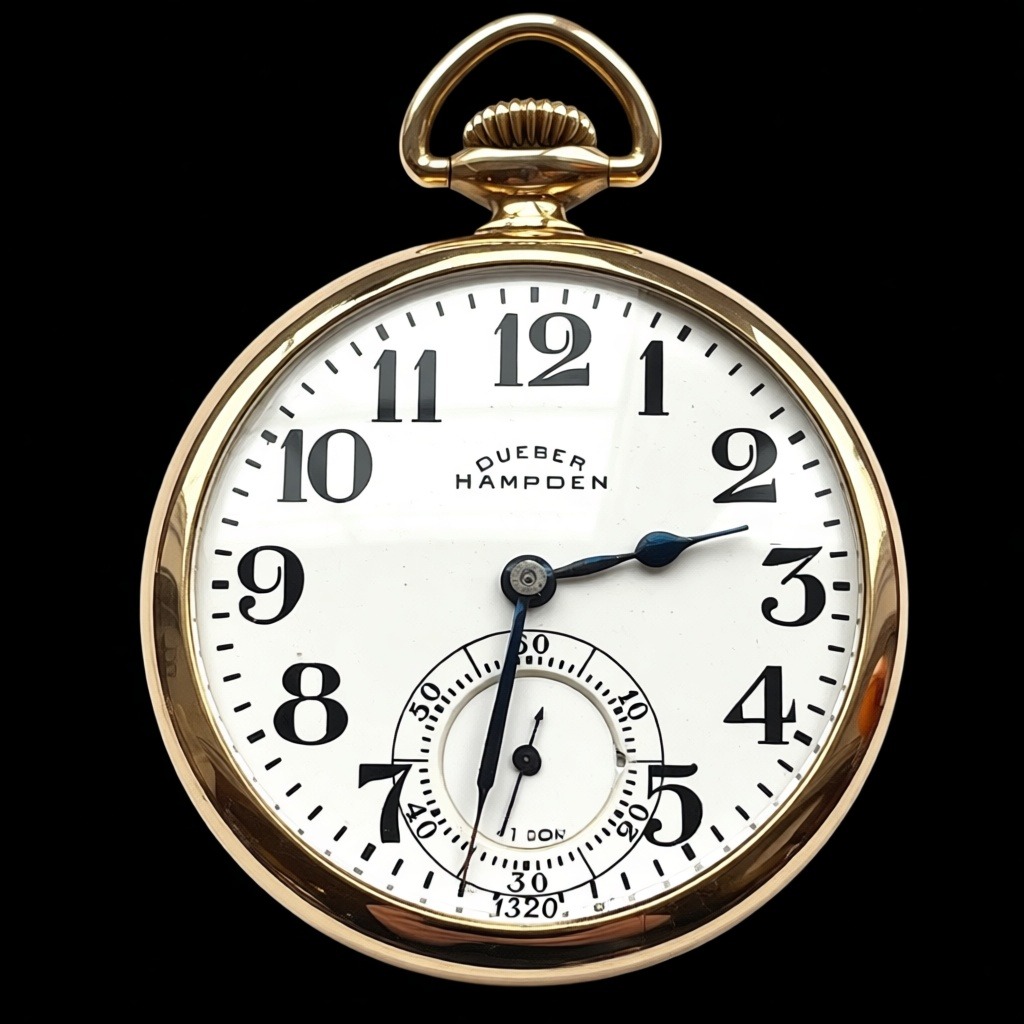
Hampden
Dueber-Hampden, Canton Ohio, 1877–1927. Known for quality railroad watches. Shown: Dueber Hampden open-face railroad grade.
History & Serials →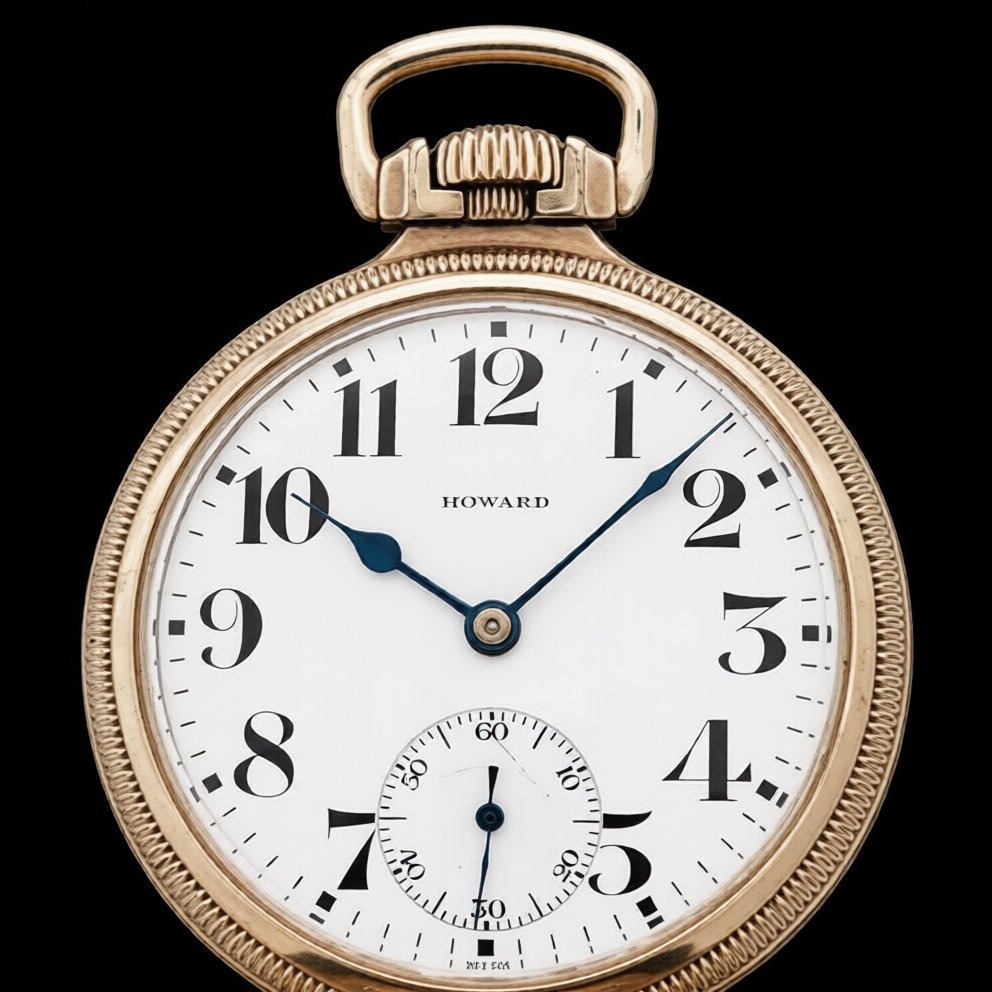
E. Howard
Boston, 1858–1904, then the name continued under Keystone to 1930. One of America's earliest and most respected independent watchmakers. Noted for precision and conservative elegance.
History & Serials →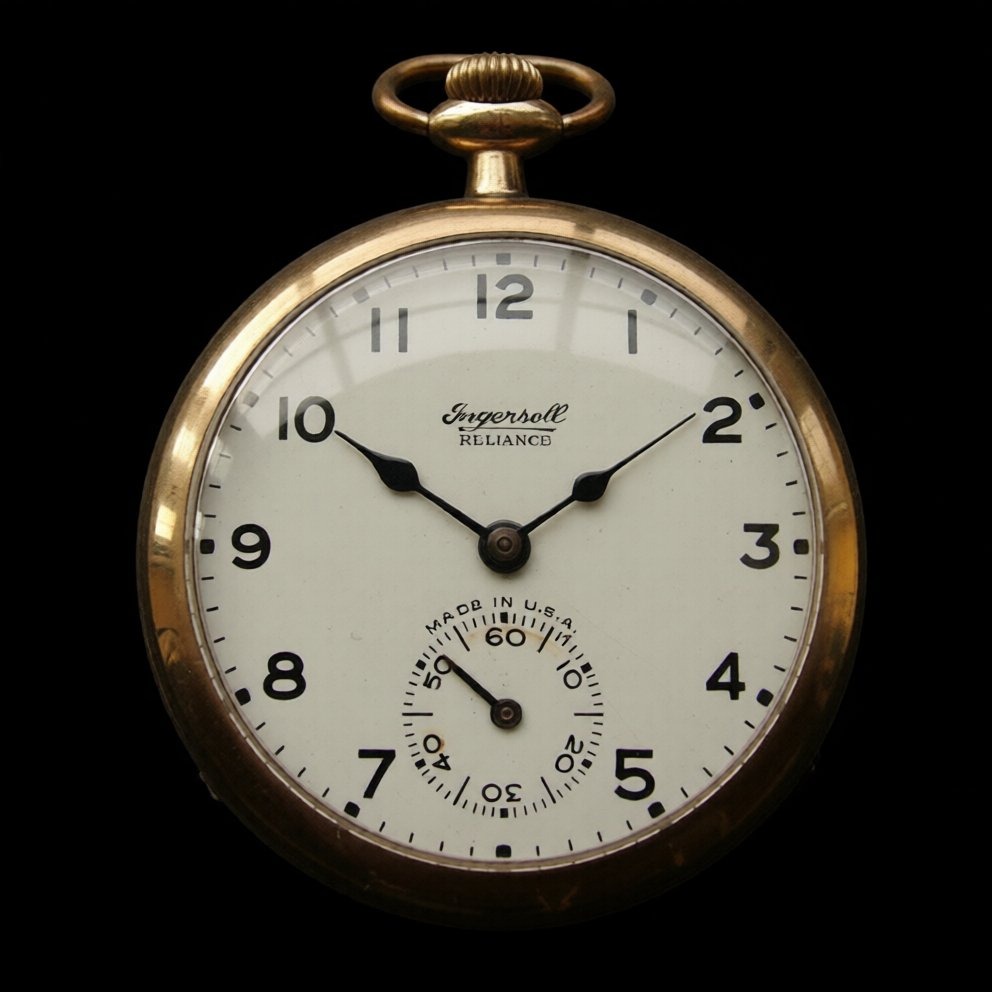
Ingersoll
The original Dollar Watch maker, 1892 onward. Shown: Ingersoll Reliance — "Made in U.S.A." Became Timex. Famous for the 1933 Mickey Mouse watch.
Read more →Many Names, Rather Fewer Factories
One thing confuses newcomers more than any other: the name on a movement is frequently not the name of the company that made it. There were four common reasons for this, and all four are still circulating in the market today.
Private label. A jeweller, a distributor or a mail-order house would order a batch of movements and have its own name engraved on them. Illinois did more of this than anyone, but every large factory obliged. A watch marked with a name you cannot find in any reference book is usually a private-label movement from a maker you have heard of.
Contract manufacture. Ball never built a movement in its life. It wrote a specification, placed orders with Hampden, Hamilton, Waltham and Elgin, and sold the results under its own name — which is why a Ball watch is simultaneously a genuine Ball and a genuine something else.
Names that changed hands. When a firm failed, its trademark had value even when its factory did not. The Howard name was bought by the Keystone Watch Case Company in 1902 and used on watches Edward Howard had nothing to do with. Hamilton bought Illinois in 1927 and went on stamping the Illinois name onto Lancaster-built movements for a decade.
Names invented wholesale. A great many Swiss export watches carried names designed to sound like established makers without quite infringing on them. Our guide to fake and imitation pocket watches covers this trade, some of which is now collectable in its own right.
The practical consequence: identify the movement before you identify the watch. The makers' marks guide will help with European movements, and the serial tables below with American ones.
Swiss & European Pocket Watch Makers
The Swiss reached the same destination by a different road. Where America built vast integrated factories making every part under one roof, Switzerland relied for most of the nineteenth century on établissage — a network of specialist workshops, each making one component or performing one operation, with a finishing house assembling the results. It produced superb watches and a bewildering profusion of names, and it very nearly lost the industry to American machinery before the Swiss mechanised in response.
Two practical differences matter to collectors. Swiss pocket watches are generally harder to date, because most firms never published serial records in the way the American factories did. And the finest of them occupy a different market altogether — a good Waltham is a hundred-pound watch, while a Patek Philippe pocket watch is an investment. The Swiss watch industry page tells the fuller story.
Patek Philippe
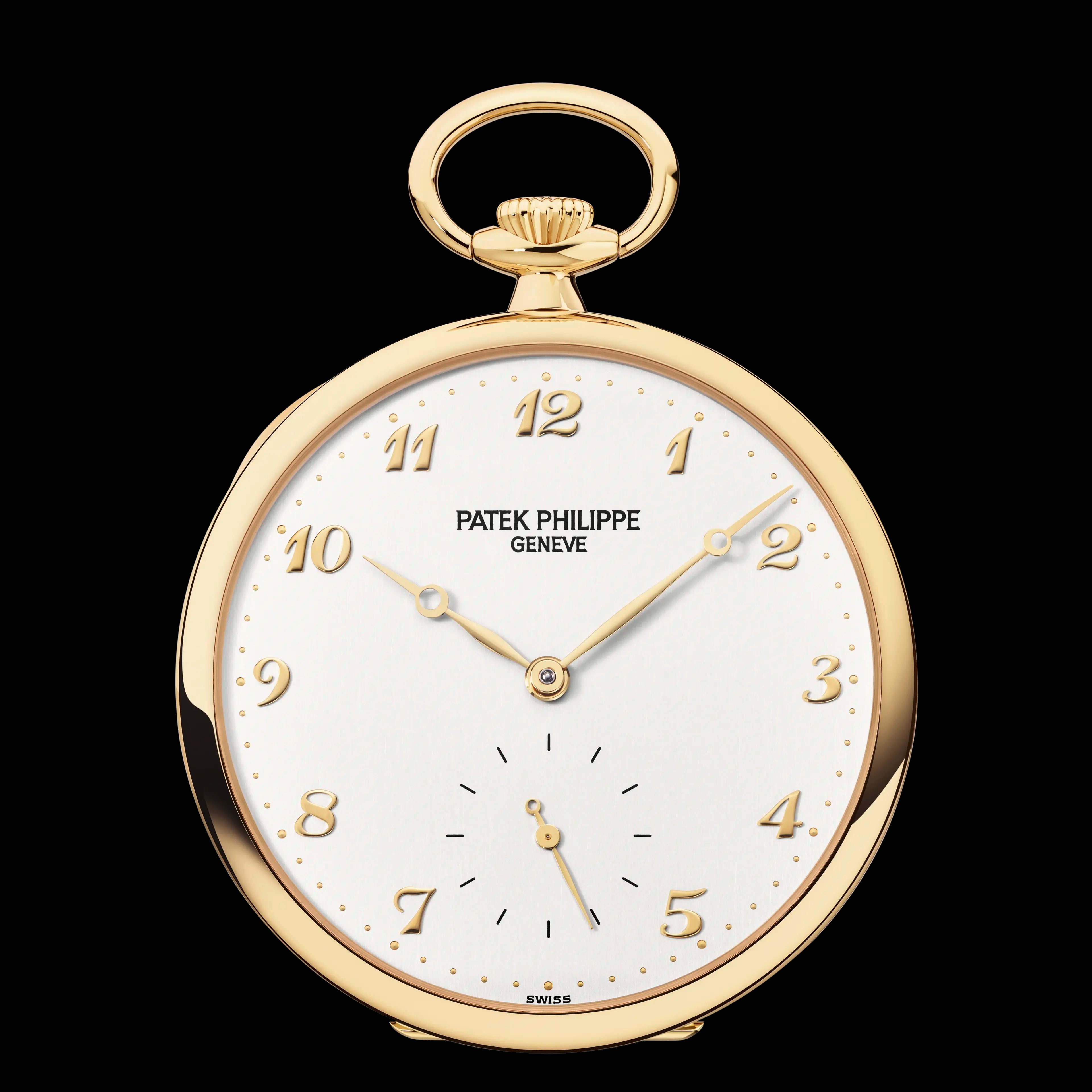
Geneva, founded 1839. The pinnacle of Swiss watchmaking. "You never actually own a Patek Philippe — you merely look after it for the next generation."
Read more →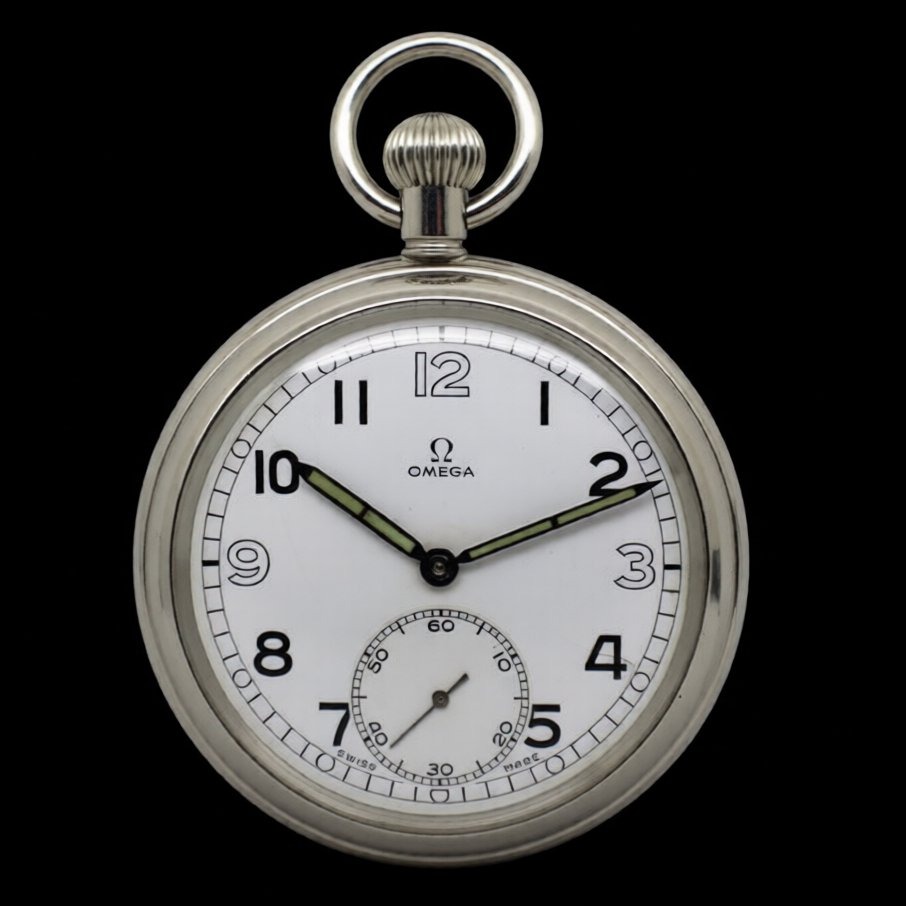
Omega
La Chaux-de-Fonds, founded 1848. Official timekeeper of the Olympic Games and NASA. Shown: Omega military issue pocket watch with luminous hands.
Read more →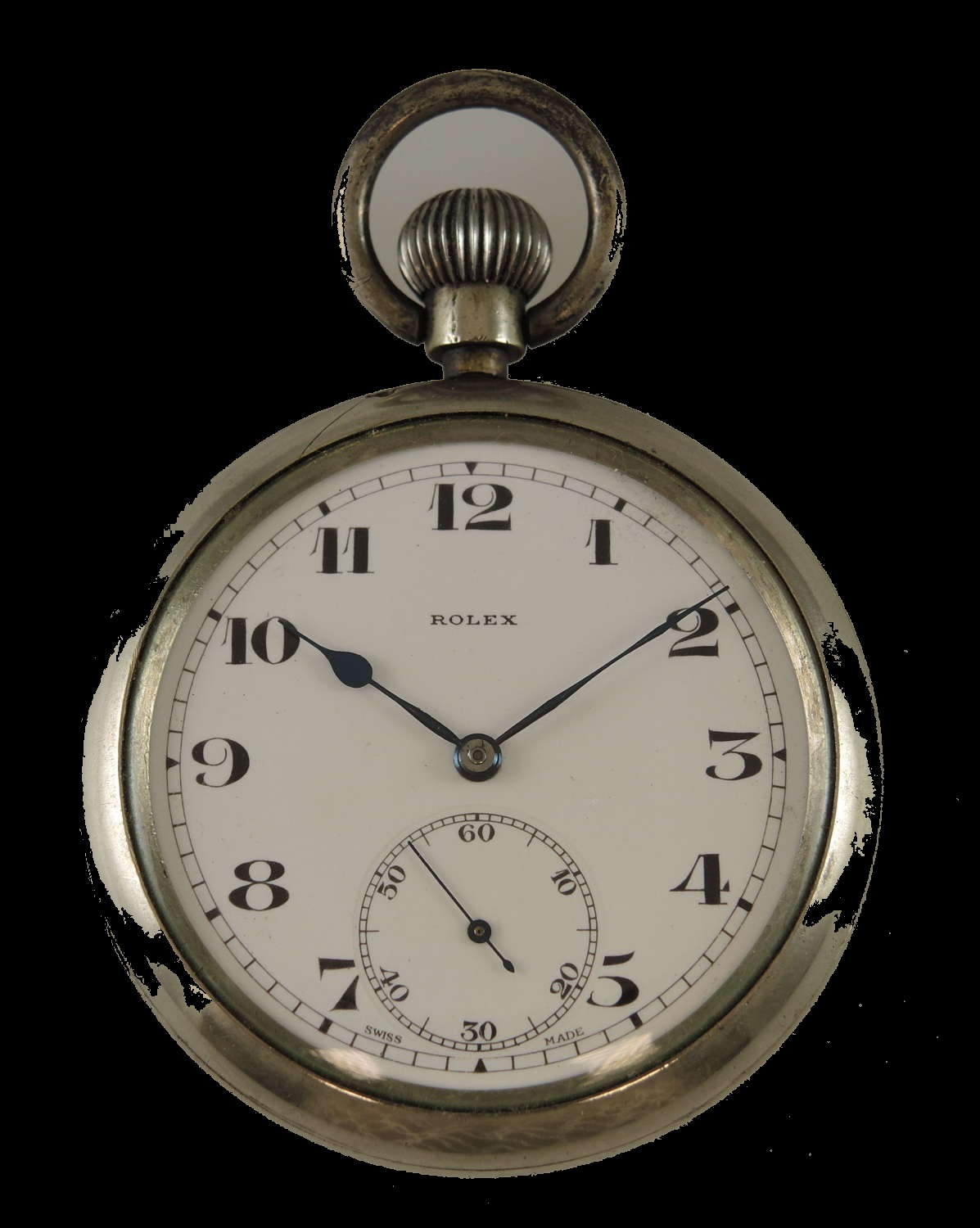
Rolex
Founded London 1905, Geneva from 1919. Shown: An early Rolex silver-cased pocket watch — a rare piece from before the company's wristwatch dominance.
Read more →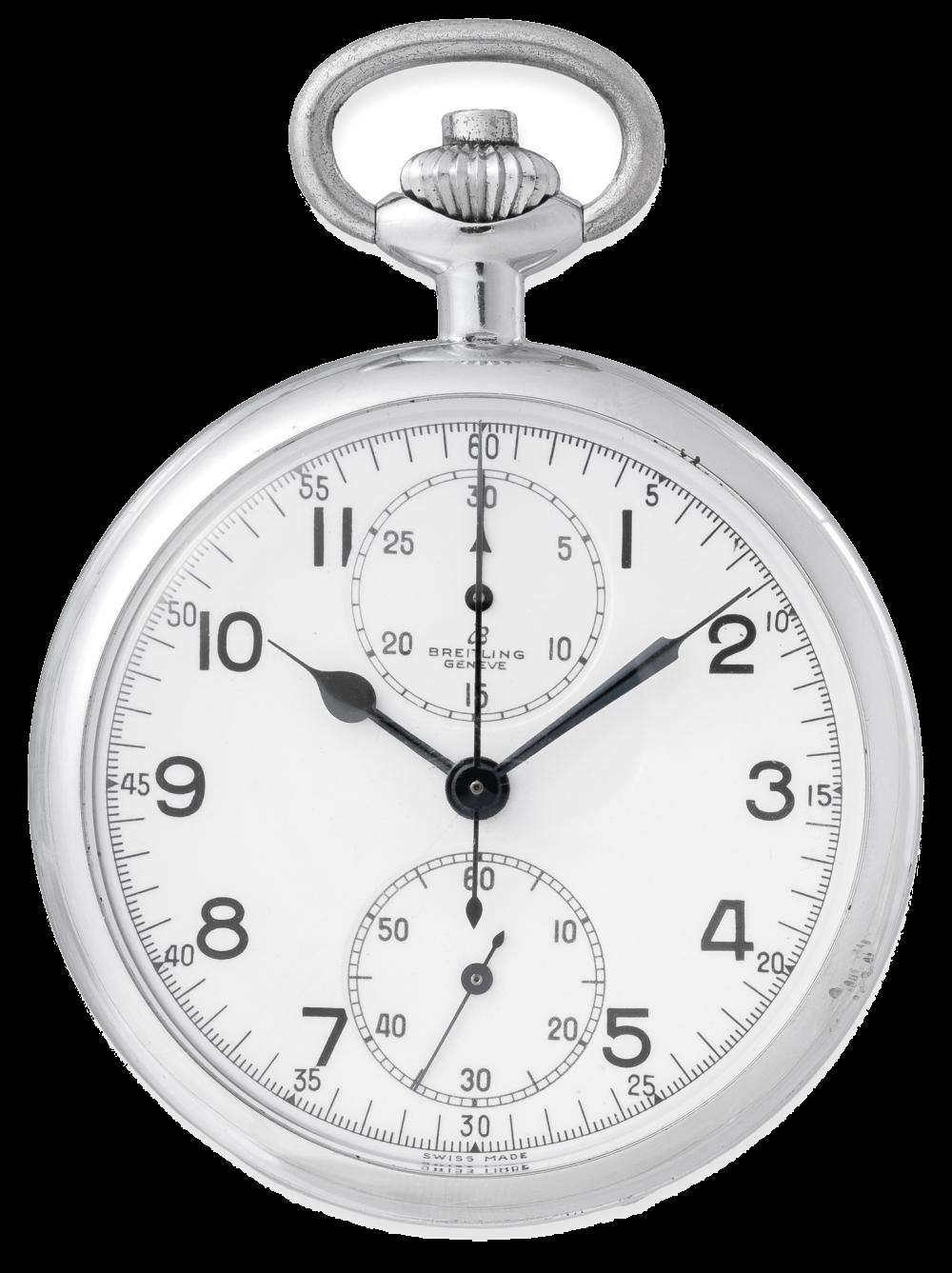
Breitling
Saint-Imier, est. 1884. Shown: a Breitling Genève pocket chronograph with two registers — a fine example of their precision timing heritage.
Read more →Serial Number Look-Up Tables
Use the links below to date your watch precisely. Enter the serial number from the movement plate — not the case — for an instant result.
- Waltham Serial Numbers 1852–1957
- Hamilton Serial Numbers 1893–1942
- Illinois Serial Numbers 1872–1927
- Hampden Serial Numbers 1877–1927
- Howard Serial Numbers 1858–1930
- Elgin Serial Numbers 1867–1964
If You Have One Watch and No Idea Where to Begin
Work through it in this order and you will not go far wrong.
First, open the back and read the movement. Everything worth knowing is engraved there — the maker or the retailer's name, a grade name or number, a jewel count, and the serial number. The case tells you about the case and very little else.
Second, date it. If the movement carries one of the six American names in the tables above, the serial number will give you a year of manufacture within a year or two. Our serial number lookup tool does the arithmetic for you and works offline once loaded.
Third, find out what you actually have. The date is the least informative thing about a watch. Two movements of the same year from the same factory can differ in value by a factor of twenty, and the difference lies in the grade — see grades and jewel counts.
Fourth, be realistic about condition and value. Most surviving pocket watches are ordinary watches in indifferent condition, and that is fine — they are pleasant things to own. Our guide to what drives pocket watch values sets expectations honestly, and the repair guide covers what it costs to get one running properly before you spend money on it.